


How NGO for kids is building Stronger Childhoods in India

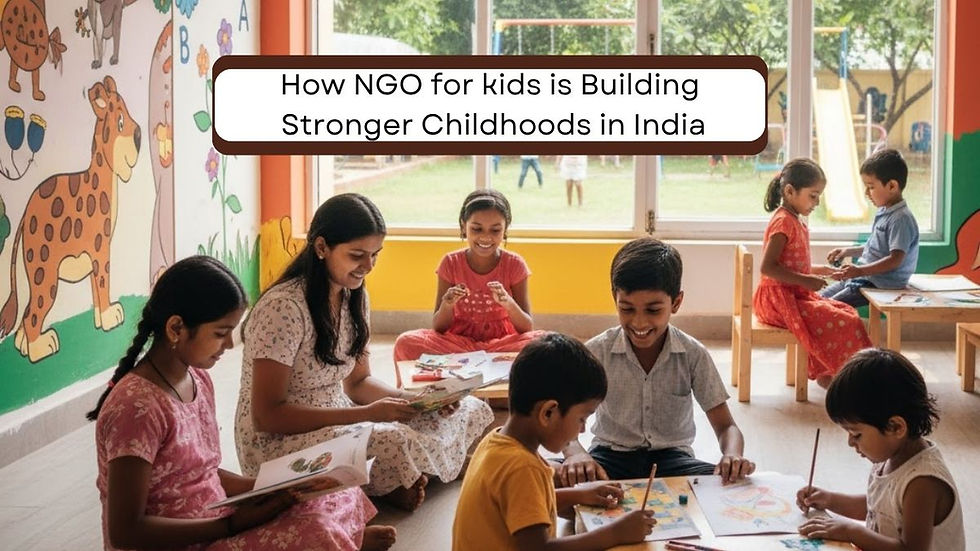
NGOs for kids play one of the most essential roles in shaping the lives of children from low-income communities, migrant families, and underserved environments. While many people assume these organisations simply “help children,” the truth is much deeper. Their work is comprehensive, structured, and designed to ensure that every child receives the care, protection, and opportunities they deserve.
Below is a closer look at what NGOs for kids truly do and why their contribution has become indispensable in India’s fast-growing, unequal social landscape.
What NGOs for Kids Do:
1. Provide Quality Education Support
Education is the foundation of every child’s future. NGOs run education programs for children and set up learning centres, mobile classrooms, bridge courses, and after-school support to help children stay in school. They work to reduce dropout rates and strengthen children’s academic confidence through structured teaching and mentorship.
2. Ensure Health, Nutrition & Hygiene Care
Children from marginalized backgrounds often lack access to basic healthcare. NGOs conduct medical check-ups, offer nutritional meals, and teach essential hygiene habits. These efforts prevent illness, improve immunity, and promote overall well-being.
3. Create Safe, Child-Friendly Spaces
For children living at construction sites, slums, or temporary shelters, safety is a daily concern. NGOs build child-friendly spaces-centres where learning, play, and emotional support go hand in hand.
4. Offer Early Childhood Care
Young children need nurturing environments. Many NGOs operate crèches and daycare centres to care for toddlers and preschoolers, ensuring proper nutrition, early learning, and protection while parents’ work.
5. Protect Children from Abuse & Neglect
Through awareness campaigns, counselling, and collaboration with child-protection systems, NGOs shield children from exploitation, child labour, trafficking, and unsafe environments. They empower families with knowledge about child rights and safety.
6. Conduct Life-Skill Sessions
Beyond academics, NGOs teach essential life skills such as problem-solving, communication, emotional regulation, and social behaviour. These skills help children navigate challenges confidently.
7. Provide Learning Resources & Scholarships
From school supplies and uniforms to digital tools and scholarships, NGOs make sure children have the resources needed to learn without financial barriers.
8. Organize Extracurricular Activities
Art, sports, storytelling, music, and cultural activities help children develop creativity, self-esteem, and teamwork. NGOs integrate these activities to support holistic growth.
9. Engage Parents & Communities
NGOs work closely with families and communities to build long-term support systems for children. They conduct awareness sessions to highlight the importance of education, health, and child rights.
10. Monitor Progress & Development
To ensure impact, NGOs regularly track attendance, performance, health indicators, and emotional well-being. This helps them refine programs and continuously improve outcomes.
Suggested Read: Child Education Programs in India
Concluding Thoughts
NGOs for kids are more than support systems, they are catalysts for change. Their work transforms childhood for millions of children who would otherwise be left behind due to poverty, migration, or lack of resources. By providing education, protection, nutrition, and emotional care, these organisations create a foundation for children to dream, grow, and achieve. In a country as diverse and dynamic as India, NGOs remain vital partners in building a future where every child has an equal chance to thrive. Supporting their efforts means contributing to a stronger, more compassionate, and more empowered India.


Comments